The Grand Prix to Growth
Leading the visual direction of an immersive Formula One learning experience through storytelling, scalable design systems, and AI-assisted imagery.
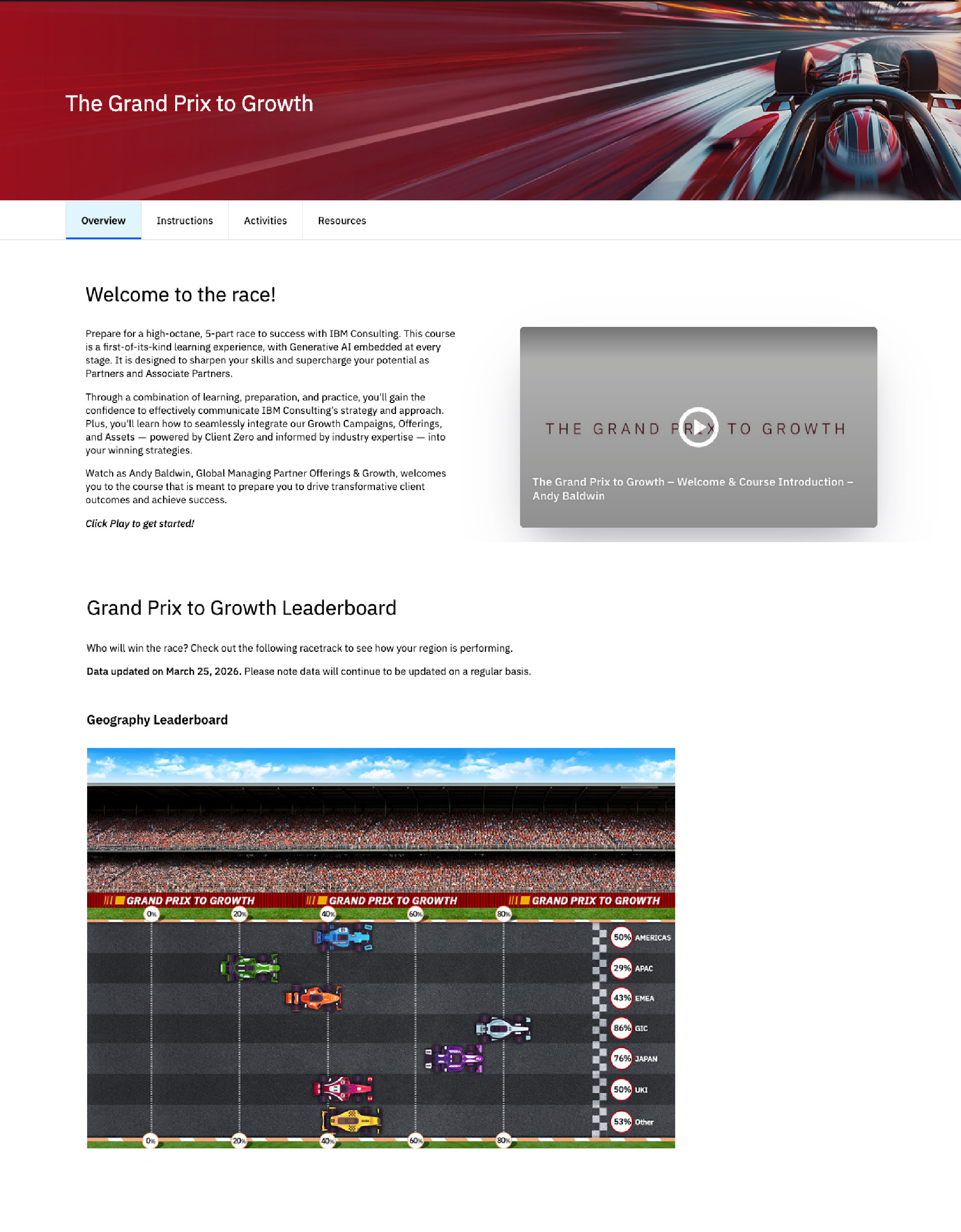
The Challenge
IBM set out to create a Formula One-inspired learning experience that would bring the energy, precision, and competitive spirit of racing into executive education. The creative challenge was to make the experience feel immersive and dynamic while remaining unmistakeably IBM.
With a large volume of content, multiple stakeholders, three designers working in parallel, and an aggressive production schedule, the project needed more than a collection of polished assets. It needed a clear visual direction that could guide creative decisions and remain consistent throughout the entire experience.
Creative Direction
I established a visual direction that combined the speed, intensity, and cinematic character of Formula One with IBM's structured and sophisticated visual language. Rather than allowing either identity to dominate, the goal was to create an experience where both could coexist naturally.
Typography, imagery, composition, color, and visual pacing were treated as parts of the same system. Each decision supported the larger narrative: an executive learning experience inspired by the precision, teamwork, technology, and constant optimization behind high-performance racing.
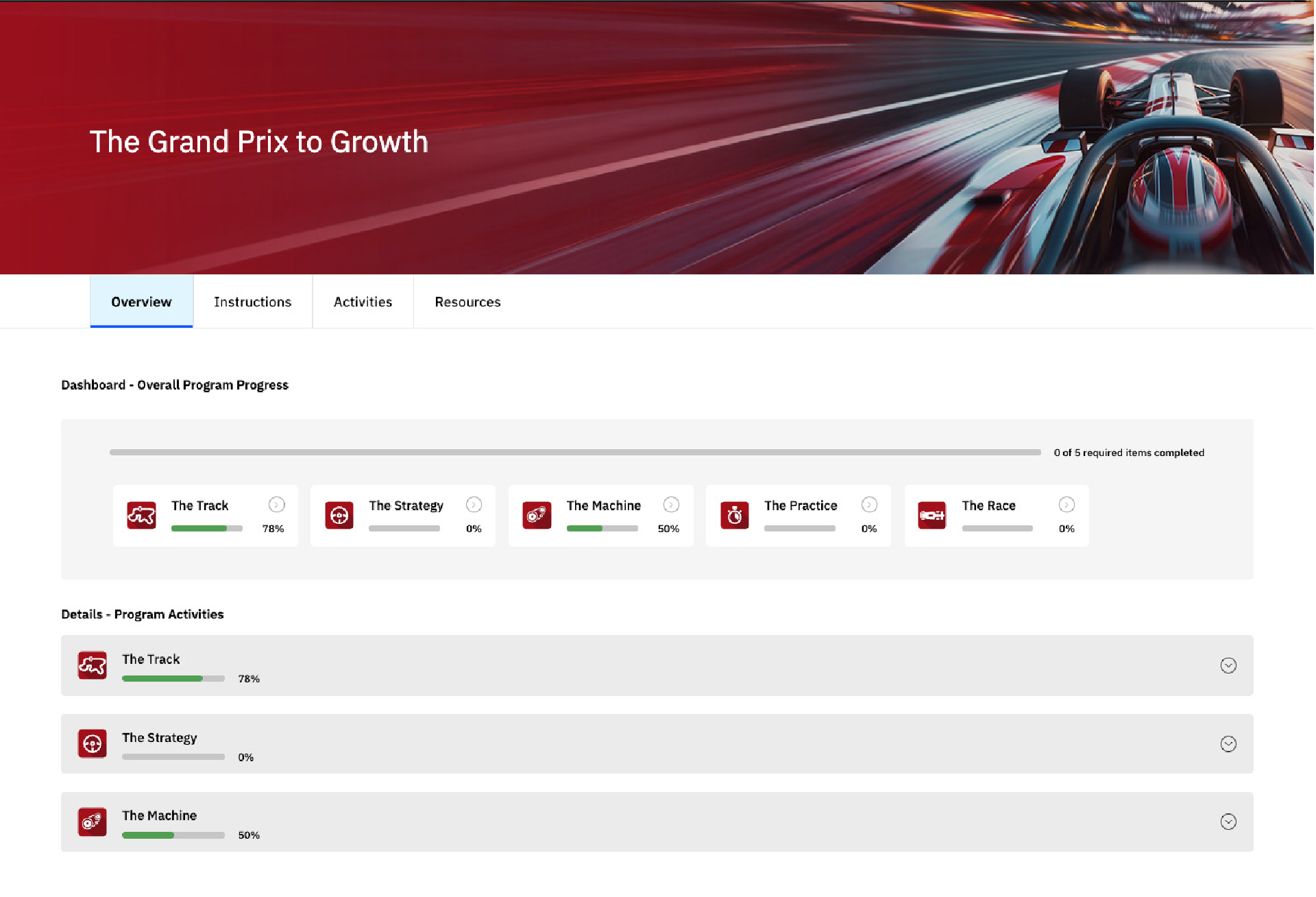
Building the Visual System
To translate the creative direction into a scalable experience, I developed a modular visual system that could support dozens of learning assets without becoming repetitive. Reusable components, layout principles, image treatments, and consistent visual patterns gave the team a shared creative framework while still allowing individual moments to feel distinct.
AI-assisted image generation also became part of that system. I used it intentionally to expand the range and diversity of Formula One imagery available to us, selecting and refining outputs so they remained consistent with the established visual direction rather than feeling like disconnected AI-generated assets.
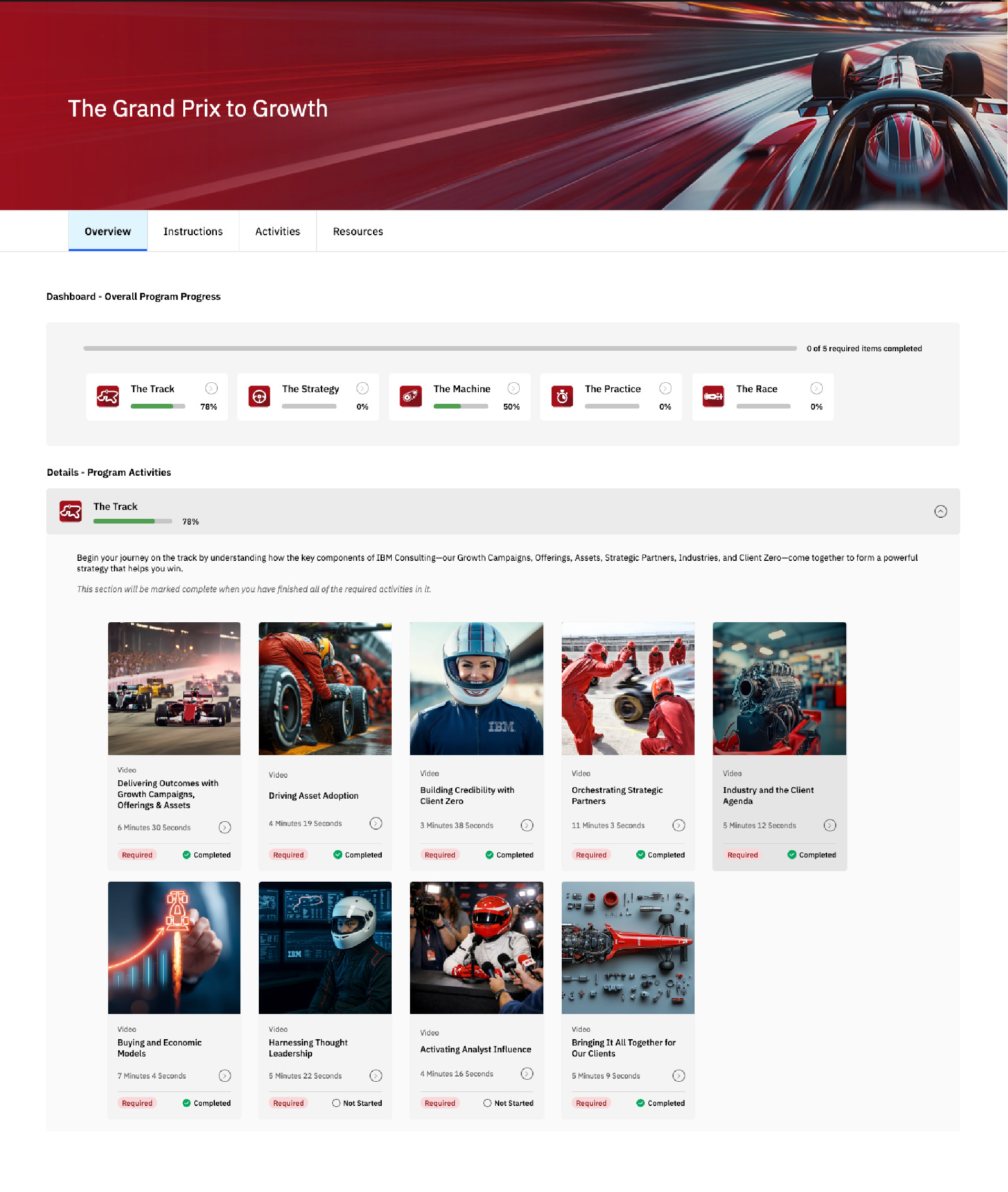
Leading the Team
With three designers working simultaneously, I organized the project into complementary workstreams that could move in parallel while remaining connected by a shared creative direction. This allowed the team to work efficiently under a tight timeline without sacrificing consistency across learning, graphics, and video.
Visual Direction & Design Lead — My role: Established the visual identity, designed the core graphic and video templates, defined the visual guidelines, and coordinated with stakeholders throughout the project.
Graphic Design: Expanded the established system across individual learning modules, adapting the templates and visual principles to the specific needs of each experience.
Video Production: Extended the creative direction into motion, using the initial templates and guidance to edit and produce the remaining video content.
Throughout production, I reviewed work across the three streams, provided creative feedback, and helped resolve inconsistencies as they emerged, ensuring the final experience felt like one cohesive system rather than separate pieces produced by different designers.
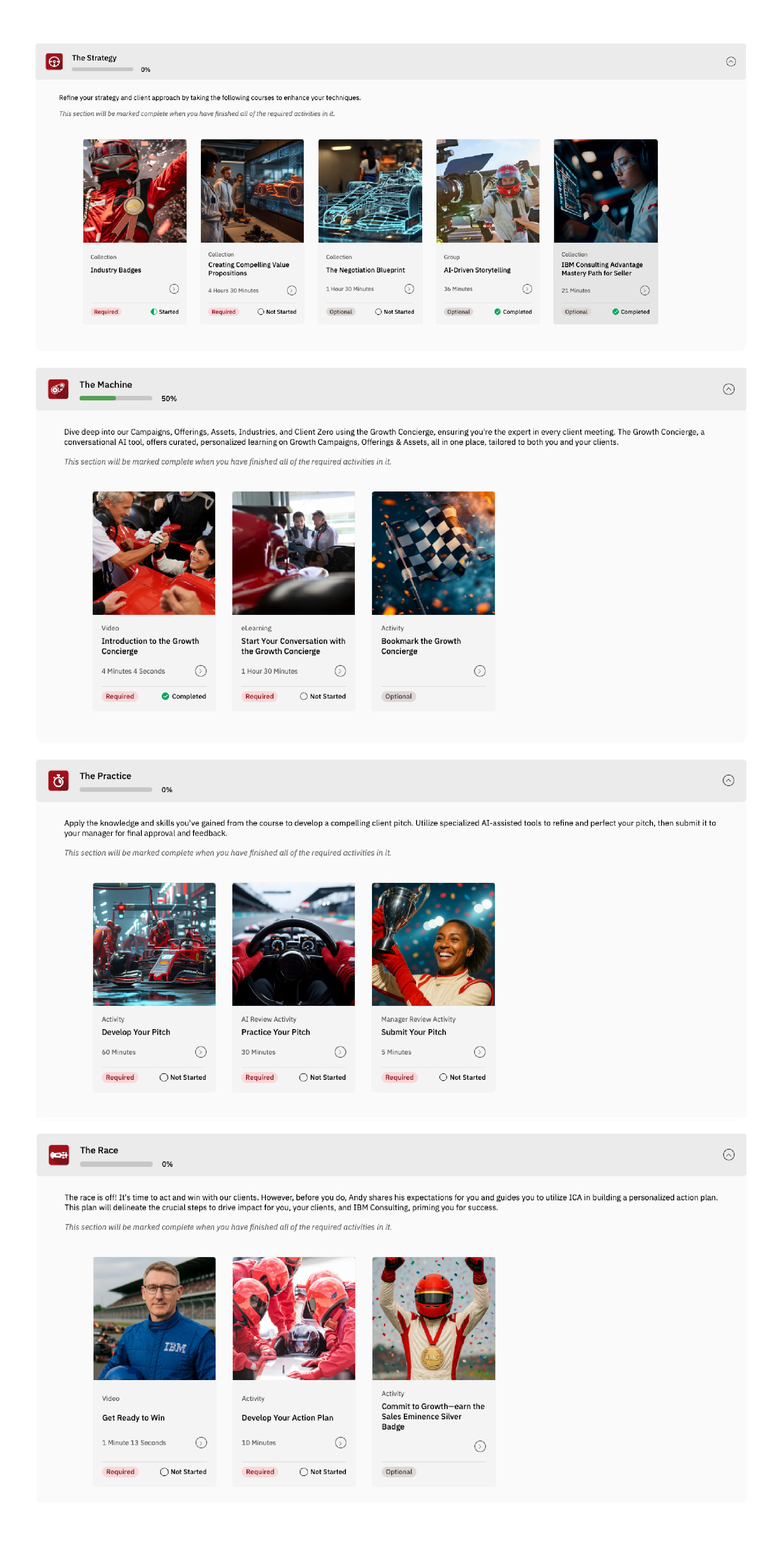
Results & Business Impact
Delivered the complete learning experience on schedule despite an aggressive production timeline.
Unified dozens of assets under one coherent visual direction.
Enabled three designers to work simultaneously through reusable components and shared visual principles.
Expanded representation in Formula One imagery through thoughtfully directed AI-generated visuals.
Balanced the energy of the Formula One/Ferrari world with IBM's enterprise brand standards.
Received positive stakeholder feedback while reducing inconsistency and unnecessary rework.
The visual system wasn't simply a stylistic choice—it became a production strategy that helped the team deliver a complex experience faster and more consistently.
Lessons Learned
This project reinforced that creative direction is as much about creating clarity for others as it is about creating strong visuals. A successful visual system has to give designers enough structure to stay aligned without limiting their ability to solve problems creatively.
It also strengthened my approach to leading design under pressure: establish the vision early, communicate the reasoning behind it, create systems that make good decisions easier, and stay involved enough to protect the quality of the final experience.
My Role
As lead designer, I was responsible for shaping the project's visual direction and carrying it from concept through execution. I worked across creative exploration, design-system development, AI-assisted imagery, hands-on production, design reviews, stakeholder alignment, and final quality assurance.
The role required me to move continuously between the big picture and the details—defining how the experience should look and feel while making sure every individual execution contributed to that vision.